Influencer marketing (IM) has emerged as one of the most significant phenomena of the digital age, growing exponentially over the past decade alongside the expansion of the internet and the proliferation of social media platforms. What began as a niche practice of online endorsements has evolved into a global industry that not only drives consumer behaviour but also shapes public opinion across economic, political and social domains.
Freberg et al. (2010) described influencers as a “new type of third-party endorser who shapes audience attitudes through blogs, tweets and other social media platforms”. Unlike traditional celebrity endorsements, influencers derive their credibility from relatability, authenticity and perceived expertise. Their ability to build trust through personal experiences and recommendations has positioned them as powerful intermediaries between brands and consumers.
The global influencer marketing industry, valued at approximately USD 10 billion in 2020, has grown rapidly, surpassing USD 21 billion in 2023 and projected to exceed USD 32 billion by 2025. By 2030, the broader creator economy — which includes influencers, content creators and digital entrepreneurs—is expected to surpass USD 500 billion, underscoring its central role in the future of digital commerce and communication.
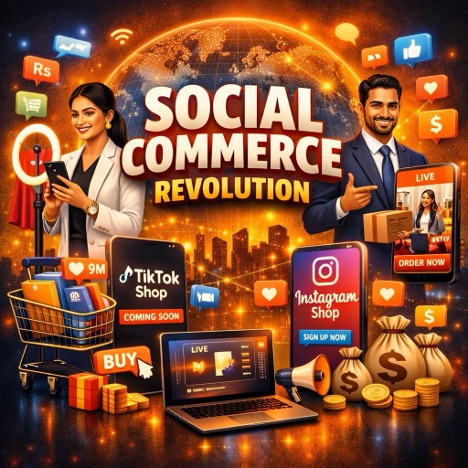
Social media platforms have been instrumental in shaping the trajectory of influencer marketing. Instagram and YouTube remain dominant for long-form storytelling and brand collaborations, while TikTok has transformed short-form content, driving viral trends and rapid consumer adoption. The integration of social commerce features—such as Instagram Shops, TikTok Shop and YouTube Shopping — has further blurred the line between content and commerce, enabling consumers to purchase products directly within platforms.
Over the past five years, Sri Lanka has witnessed a remarkable transformation in its digital landscape, driven by the rapid growth of the creator economy. This shift reflects a broader global trend, with influencers, brands and organisations investing heavily in digital-first strategies to engage audiences increasingly moving away from traditional media.
It is estimated that Sri Lanka now hosts over 5,000 active influencers across diverse sectors, including fashion, travel, food, information technology, finance, fitness and lifestyle. These range from micro-creators with niche audiences to mega-influencers commanding millions of followers across platforms.
The success of Sri Lankan influencers has inspired a new generation to enter the industry with high expectations. Many aspire to build careers through engaging content, creativity and the cultivation of loyal communities. The accessibility of digital platforms has lowered entry barriers, enabling anyone with a smartphone and internet connection to participate in the creator economy.
However, this rapid growth also presents challenges. Aspiring influencers face intense competition, algorithmic uncertainty and the need for constant innovation to remain relevant. Moreover, the industry’s sustainability depends on balancing commercial partnerships with authenticity, as audiences quickly disengage from content perceived as overly promotional or insincere.
In recent years, Sri Lanka and other emerging markets have observed a troubling trend within the creator economy: the proliferation of harmful, culturally insensitive and socially disruptive content. A growing number of influencers, driven primarily by the pursuit of subscribers, views and monetisation, neglect ethical responsibility and self-regulation. This unchecked expansion poses risks not only to cultural integrity but also to societal well-being, as content increasingly shapes public opinion, consumer behaviour and youth aspirations.
Amid this rapid rise, a small group of influencers stands out for its authenticity and social relevance. These creators move beyond purely commercial motives, producing culturally sensitive content that resonates with audiences and serves a broader social purpose. They invest time and effort in uncovering stories, insights and lived experiences that create meaningful community impact.
What distinguishes this group is not only the quality of its content but also its commitment to self-regulation. Rather than waiting for external intervention, these influencers voluntarily adopt ethical practices—ensuring transparency in sponsorships, respecting cultural sensitivities and aligning their narratives with social causes. This demonstrates that influencers themselves can act as custodians of trust, setting higher standards for the industry.
By practising self-regulation, these creators show that influencer marketing can evolve into a responsible and sustainable ecosystem. They demonstrate that creative freedom and accountability can coexist, and that regulation need not always come from external authorities. When influencers embrace responsibility, they safeguard credibility, protect audiences and elevate the creator economy into a force for cultural preservation, social advocacy and ethical influence.
In the absence of state-imposed regulation, social media has increasingly become a free-for-all, with content created and shared without meaningful accountability. This environment has given rise to concerning trends, including abusive language, sexually suggestive imagery and the trivialisation of culturally sensitive issues. Sponsored content is often produced with limited understanding, reducing influencer marketing to superficial promotion rather than informed advocacy.
Such practices erode credibility and risk alienating audiences seeking authenticity and relevance. Content driven purely by monetisation or shock value undermines the potential of influencer marketing as a tool for education, cultural preservation and social impact. The lack of oversight allows harmful narratives to spread unchecked, creating reputational risks for both creators and platforms.
This underscores the urgent need for self-regulation within the influencer community. Influencers who adopt ethical standards — such as transparency in sponsorships, respect for cultural sensitivities and a commitment to responsible storytelling — can demonstrate that regulation need not always be imposed externally. By holding themselves accountable, they set a benchmark for professionalism and help safeguard the integrity of the digital ecosystem.
Ultimately, the question remains whether influencers will rise to this challenge or whether external authorities will intervene. The path forward lies in balance: empowering creators to maintain creative freedom while ensuring content remains respectful, authentic and socially constructive. Only then can influencer marketing evolve into a sustainable and trusted industry that benefits both business and society.
Sooner rather than later, the issue of regulation and standards in influencer marketing must be addressed. This responsibility extends beyond influencers to the entire ecosystem—organisations, brands, marketing professionals, digital and media platforms, and state authorities. Each stakeholder has a role in ensuring the creator economy develops into a credible, sustainable and socially responsible industry.
Developed countries have already taken proactive steps to safeguard this sector, introducing frameworks to uphold ethical practices, protect audiences and support creator education. These efforts highlight that influencer marketing is not solely about commercial gain, but about trust, cultural relevance and long-term value.
For Sri Lanka and similar emerging markets, the lesson is clear: without collective action, the creator economy risks being undermined by unregulated practices, short-term monetisation and content that erodes cultural and social standards. Conversely, with self-regulation supported by organisational policies and appropriate state oversight, influencers can act as authentic advocates, brands can align with responsible voices and platforms can foster meaningful engagement rather than superficial reach.
The time has come to elevate influencer marketing from a fragmented gig culture into a professional ecosystem. This requires collaboration across stakeholders to establish codes of conduct, educational initiatives and transparent accountability mechanisms. Only then can the creator economy become a force that not only drives business growth but also contributes to cultural preservation, social advocacy and national competitiveness in the digital age.