Fashion Industry is one of the oldest industries in the world and has gone through significant change with the 4th industrial revolution during the last 2 decades. (Gonda , Gorgenyi-Hegyes , Nathan , & Fekete-Farkas , 2020) Fashion industry contributes to the world economy in terms of adding gross domestic products (GDP), employment, building new value chains, new business models and technological advancement. Size of the global apparel industry is estimated to be US$ 1.5 trillion in 2020 with CAGR of 4.8% for the last 5 years since 2015. It is projected to be US$2.25 trillion in 2025. (Statista, 2021) (Figure 1)
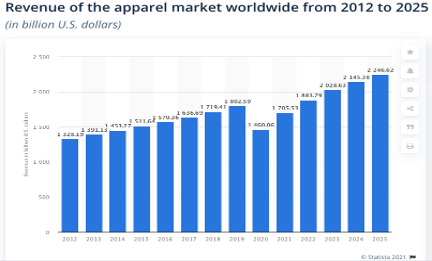
Figure 1: Market size of global apparel Industry 2012-2025
Fashion industry comprises of wide variety of categories and products, short product life cycles, complex logistics, long delivery times and ever changing consumers’ demand (Gonda et al., 2020) Rivalry among the fashion retail business has increased over the years with more small and medium businesses (SMEs) engage with the industry. However the existence of those SMEs are challenged due to a spread of global value chains, consolidation of value chains and technological advancement. (Gonda et al., 2020) With the 4th industrial revolution, fashion industry transformed into more tech-infused operations and marketing. New technologies such as IoT, 3D printing, Robotics, Artificial intelligence (AI), cloud computing etc have emerged and revolutionized the industry by providing competitive advantages for the global fashion business.
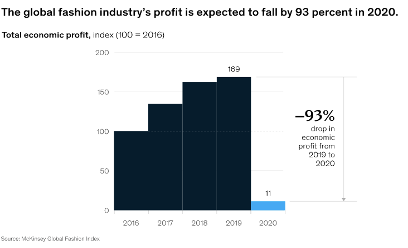
With the devastating Covid-19 pandemic, resulted worldwide great lock-down of economies have severely impacted the fashion industry. Fashion retail/wholesale stores had to close down, productions were restricted with less movement of public and disruptions in supply chains have resulted plunged in consumer demand, increasing unemployment and ever-low profits. The recent report release by McKinsey & Company highlighted that based on the changes in market capitalization over time in their index on global fashion reveled that industry profit is expected to fall by 93% in 2020 compared 4% growth in 2019. (Figure 2)
Figure2: McKinsey Global Fashion Index, State of Fashion 2021
Physical retail has severely been impacted and it is expected that 20,000-25,000 outlets to close down in united states alone. (McKinsey & Comapny, 2020) Global brands have already commenced re-visiting their business models and value chains to face the battle with Covid-19 pandemic. Zara has announced their plans to cut down 1200 outlets in next 2 years and invest €2.7 billion in-store based digitalization. (McKinsey & Comapny, 2020)
It says there is always silver lining among the dark cloud. Digital channels have been the key driver for fashion industry during the pandemic and it will be the key driver for many businesses going forward. It is expected that more than 20% annual digital growth in 2021 by growing importance on Omni-channels with platform proposition and mass customization. (McKinsey & Comapny, 2020) E-commerce fashion retail players such as ASOS, FARFETCH UK, Revolve, and Zalando have capitalized the pandemic and outperformed in 2020. They were trading 35% higher, on average, than they did in December 2019. (McKinsey & Comapny, 2020) It was reveled that digital channels is going to be the key pillar of success as highlighted in below diagram. (Figure 3)
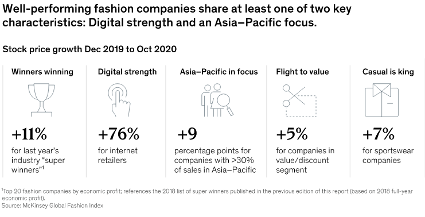
Figure 3: McKinsey Global Fashion Index, 2021
Fashion is one of the most significant contributors to the Sri Lankan economy each year. The largest segment of the industry involves apparel exports, reaching a total value of $5.3 billion in 2019, an increase 5% from 2018. (Sri Lanka Apparel, 2020) post 30-years bloody war crisis and increased tourists arrivals in the recent decade, fashion retail market in Sri Lanka surged with large conglomerates invested in local businesses promoting local brands to global such as Odel Softlogic. However fashion retail sector is mostly comprised of SMEs and it is expected that industry can grow up to US$500 million in the near future. (Fernando , Kumara , Mendis , Wettawa , & Samarasinghe , 2018) An empirical study conducted in Sri Lanka by Ranweera & Halwatura, (2018) revealed that 61% of the fashion retailers are less than 10 years in industry maturity and 85% of fashion retail outlets located in Western and Central province. (Ranaweera & Halwathura, 2014)
With the growing middle class segment, changing in spending patterns over savings, faster adoption of western culture trends, improved infrastructure and technological advancement have gained movement for the fashion retail in Sri Lanka. (Fernando et al., 2018) According to 2003 global retail development index Sri Lanka had tilled as ‘Sri Lanka thriving with fresh investment’ ranked 15th with market attractiveness of 16.6%. Therefore this sector is still emerging and has the potential grow with increased tourism and use of new technologies.
Covid-19 pandemic hit hard on Sri Lanka economy similar to the global economies, impacting the exports businesses. An apparel export account more than US$ 5 billion and is the second largest export contributor. It is estimated that US$ 1.5 billion loss in exports in the first quarter (Apr-Jun 2020) largely due to cancellation of orders and it is forecasted that 50% decline in demand in 2020. (EconomyNext, 2020) Similarly, pandemic has negatively impacted on the fashion retail business due to periodic lock-down of the country, zero tourists over last 12 months and reduced disposable income of locals due to the pandemic.
As highlighted McKinsey Fashion global report (2021) the key enabler for fashion retail business to grow would be to invest in digital channels and improve brand experience going forward. A marginal 10-15% of the fashion retailers in Sri Lanka have invested in the digital channels, which provide enormous opportunity to grow online business with increased access to Internet. (Jayasuriya & Azam, 2017) According to Digital 2021: Sri Lanka report, 50% of the population access Internet and recorded an 8% growth over last year. Further, social media users grew by 23% to 7.9 million users in 2021. However only 6% of the online users buy products/services online which is 2 percentage points increase over 2019. (Hootsuit, 2021) This has opened up opportunities for new business models to new businesses and existing brick and mortar businesses to invest in digital channels. Growing Internet usage of millennial and monotonous experience in physical shopping resulted businesses to exploit digital channels especially with devastating pandemic like Covid-19. Fashionmarket.lk is one of the recently launched e-commerce fashion retailer. (Lanka Buisness Online, 2015) Also increasing trend seen from local brands such as Odel, Kelly Fleder, Gflock and Spring & Summer have already invested in digital space. (Jayasuriya & Azam , 2017)
Fashion industry has short product life cycles and marketers need to identify those trends and adopt quickly to cater the market to earn the first mover advatage. Digitalisation and digital media have become the best plaforms for marketers to get merged with fashion business. Ratnayake, (2018) highlighted the role of digital marketing in retail fashion industry as shown in the figure 4. He also highlighted the how Victoria Secret- global brand has used digital marketing to increase brand penetration and drive conversions to be the dominat force in the lingerie sector as shown in figure 5.
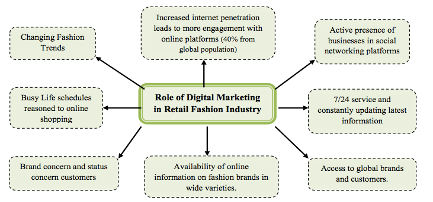
Figure 4: Role of Digital marketing in Fashion Retial Industy
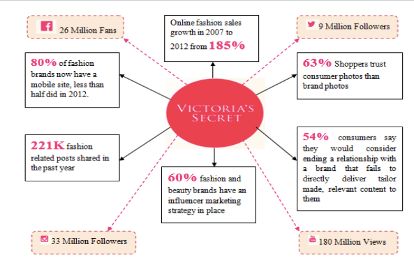
Figure 5: Victoria Secret’s success in fashion industry through digital marketing
Cited by (Rathnayaka , 2018)